Reader Project: Skinny Workshop Cart — The Family Handyman
Seeing the Skinny Laundry Room Cart idea in The Family Handyman'due south May 2012 event gave me inspiration. I built a skinny storage cart for my workshop.
I am a keen DIY person, and I particularly detest to discard plywood that is surplus to a project, considering not only the wood, but besides the oil products and energy used to make it, and the touch on this may have on our environment. Ofttimes, using a surplus slice saves me the cost of buying a whole new sheet.
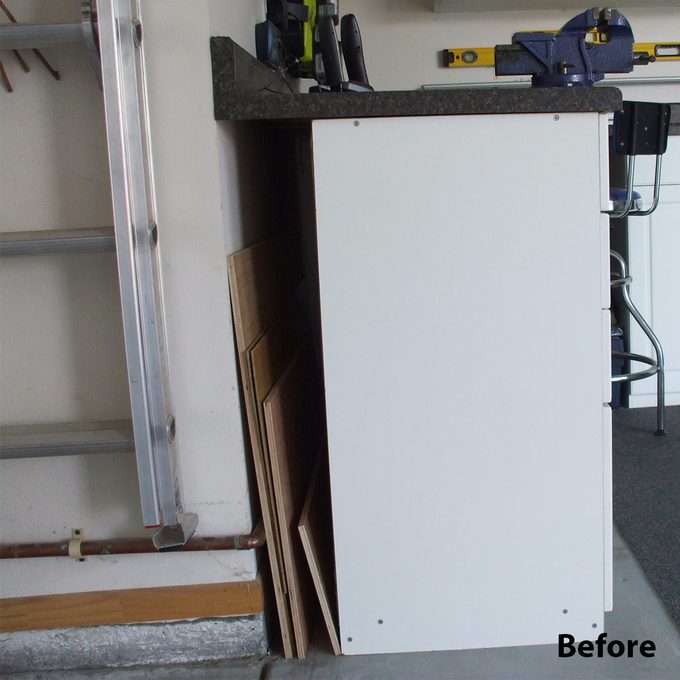
The first photograph shows the 'Before' version of where I store my surplus plywood. Pieces cannot exist stacked on top of each other, nor can shorter pieces be placed end-to-finish, equally they would be impossible to retrieve.
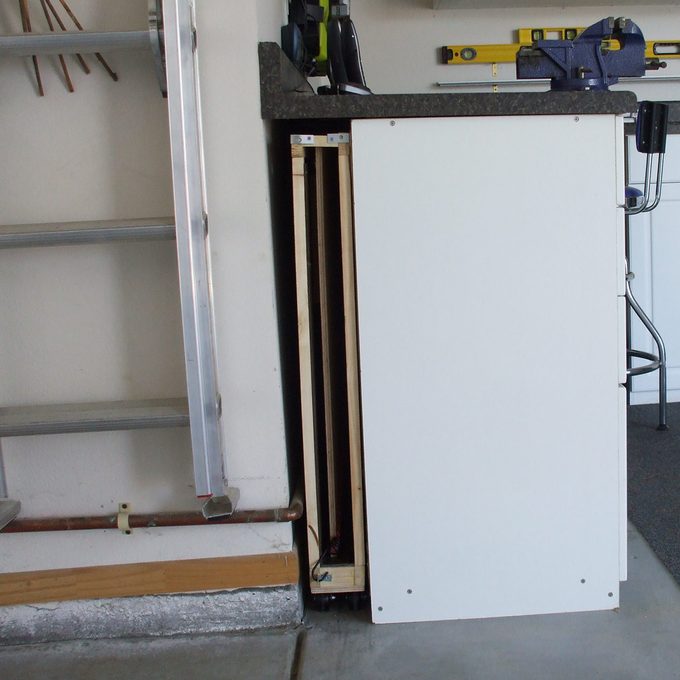
Seeing the Skinny Laundry Room Cart idea in The Family unit Handyman'south May 2012 issue gave me inspiration. I congenital a skinny storage cart that would fit between my workshop base of operations units and the wall.
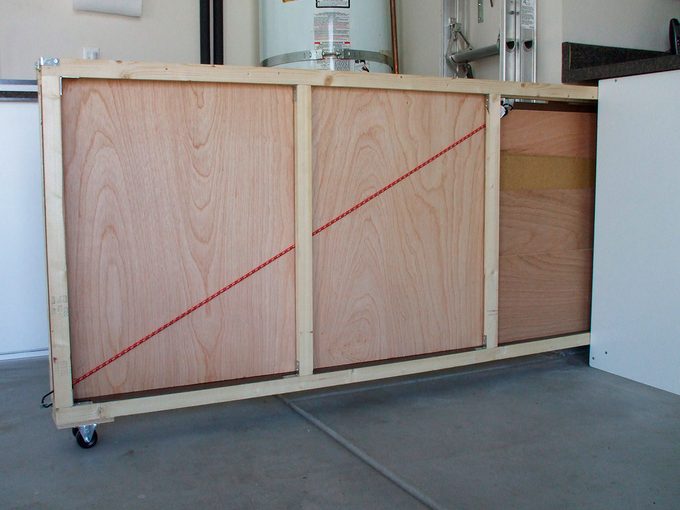
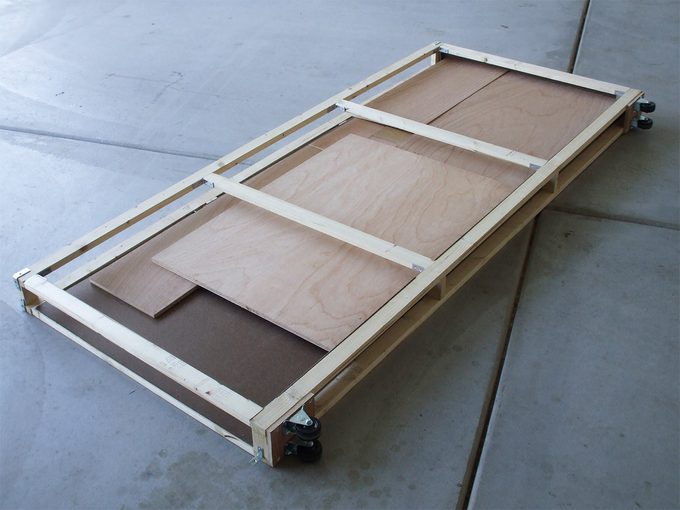
I used furring strips to make the primary frame. These are typically used for drywall repair and mensurate near iii/4 in. ten i-1/two in. They are very inexpensive, about 85 cents for an 8-ft. length. They do not always come to exact size and are sometimes bowed, but are acceptable for this task.
The virtually expensive items in the project were the fixed casters. I used industrial quality, at about $5 each, since plywood can be heavy, but these could be purchased for less.
The internal length of the unit is vi ft. two in., so a six-ft. panel has a picayune wiggle room, and the internal width is two-1/two in.—however enough for five layers of 1/2-in. plywood. I cut odd-shape surplus pieces into rectangles for storage, equally this makes them easier to load, and the chances of using the odd shapes are slim, anyway.
I faced one internal side of the unit of measurement and the base with hardboard left over from a previous project to make information technology easier to slide panels in and to stop smaller pieces from falling out.
When loading the unit of measurement, I put smaller pieces in first and larger ones after, to create a 'sandwich' effect. I did attach brackets to which bungee cords could exist fastened to farther stabilize the load, but these are not oft needed.
Although I designed the unit with plywood in heed, it can be used for anything that has parallel sides, including drywall panels, hardboard, sheet metallic and lumber. — John White
dickinsonhumpeatered.blogspot.com
Source: https://www.familyhandyman.com/article/reader-project-skinny-workshop-cart/

Post a Comment for "Reader Project: Skinny Workshop Cart — The Family Handyman"